
This easy homemade Walnut Butter recipe is made with roasted walnuts, cinnamon, and vanilla for a deliciously rich, creamy nut butter with just three ingredients. Learn how to make walnut butter, plus tips for getting the perfect consistency, storing it, and enjoying it on toast, oatmeal, cookies, and more!

This homemade Walnut Butter is a delicious, easy nut butter recipe made with roasted walnuts, cinnamon, and vanilla. It’s rich, creamy, full of nutty flavor, and surprisingly simple to make at home! If you’ve ever wondered how to make walnut butter from scratch, you’re in the right place. All you need are three ingredients, a food processor, and a little patience.

I love homemade nut butters. Peanut butter, almond butter, cashew butter, pistachio butter, hazelnut butter, macadamia nut butter, and of course, walnut butter! SO many possibilities!
Some specialty nut butters can be expensive at the grocery store, so making your own is a fun way to experiment with different nuts and flavors. This particular walnut butter recipe starts with toasted walnuts, which give it a rich, slightly earthy flavor. A little cinnamon adds warmth, while vanilla gives it a delicious flavor that makes it perfect for breakfast, snacks, and even desserts.
And there’s no added sugar or salt in the recipe. Of course, you can add a little sweetener or salt if you’d like, but I actually enjoy the natural flavor of the walnuts with just cinnamon and vanilla.
One thing to know about homemade walnut butter is that it doesn’t turn smooth immediately. At first, the walnuts look chopped. Then they become fine crumbs, followed by a thick paste. Keep processing, and eventually the natural oils help turn everything into a spreadable nut butter. It can take 5-10 minutes or more, depending on your food processor. Don’t give up! The results are worth a little patience.
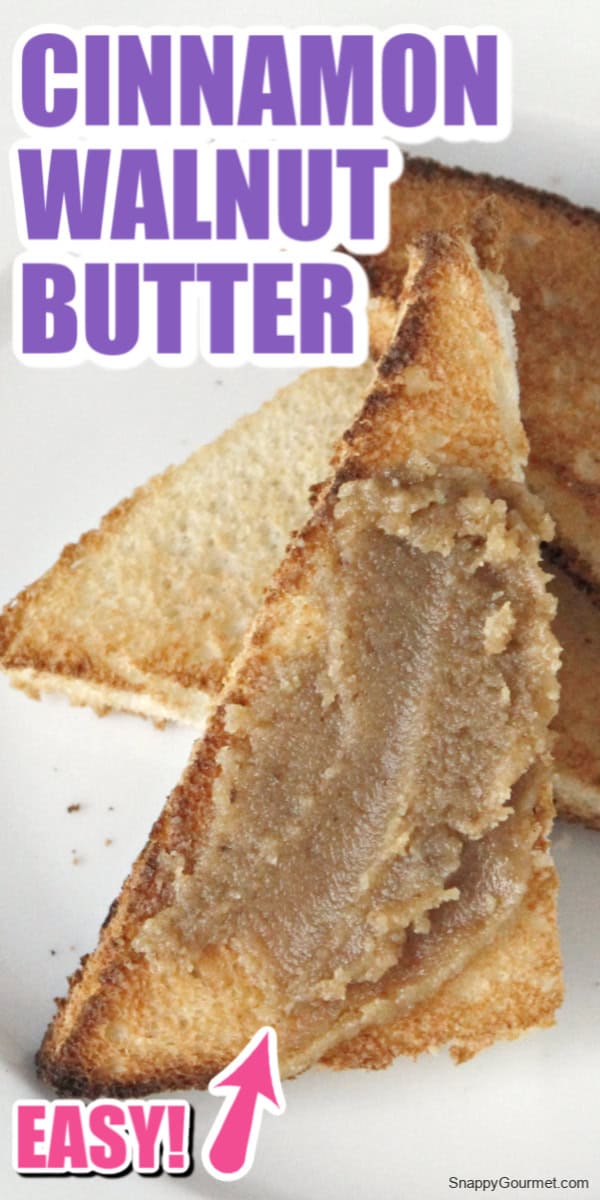
Spread this homemade cinnamon vanilla walnut butter on toast, swirl it into oatmeal, add it to smoothies, or use it in your favorite cookies and chocolate desserts. It’s a fun alternative to traditional peanut butter, especially if you enjoy experimenting with homemade nut butter recipes.
What I Love About This Recipe
- It’s easy to make at home! This homemade Walnut Butter recipe only requires three simple ingredients. You don’t need any complicated techniques or special cooking skills. Just roast the walnuts, add everything to a food processor, and let the machine do most of the work. Easy peasy!
- The cinnamon and vanilla taste AMAZING together. Toasted walnuts have a rich, nutty flavor that’s delicious on its own. Adding cinnamon and vanilla gives this walnut butter a warm, cozy flavor without needing extra sugar. It’s especially good spread on toast, stirred into oatmeal, or paired with apples. SO good!
- You control the ingredients. Unlike some store-bought nut butters, this recipe doesn’t require added sugar, salt, or oil. You can leave it exactly as written or customize it to your taste. Add a little salt, honey, maple syrup, or another favorite flavoring if you’d like. Homemade nut butter is all about making it your own!
- It’s a fun alternative to peanut butter. I love peanut butter, but sometimes it’s nice to change things up. Walnut butter has a different flavor that’s rich, slightly earthy, and delicious with both sweet and savory foods. You can spread it on toast, add it to smoothies, or experiment with it in cookies. Just remember that walnut butter and peanut butter don’t always behave exactly the same way in baking recipes.
What Is Walnut Butter?
Walnut butter is a homemade nut butter made by processing walnuts until their natural oils create a smooth or spreadable consistency. It’s similar to peanut butter or almond butter, but it has its own distinctive flavor.
Walnuts have a rich, slightly earthy taste with a mild natural bitterness. Roasting brings out their nutty flavor and gives the finished butter a deeper, toastier taste. You can make plain walnut butter using just walnuts, but this recipe includes cinnamon and vanilla for extra flavor.
The result is a homemade cinnamon vanilla roasted walnut butter that’s delicious for breakfast, snacks, and desserts.

Equipment You May Need
- Food Processor – The most important piece of equipment for making homemade walnut butter. A sturdy food processor helps break down the walnuts and release their natural oils. A high-powered blender designed for nut butters may also work, but I prefer a food processor because it’s generally easier to scrape down the sides and process a thick mixture.
- Baking Sheet – For spreading the walnuts in a single layer while roasting.
- Measuring Spoons – For measuring the cinnamon and vanilla extract.
- Rubber Spatula – Helpful for scraping down the sides of the food processor. Always turn off the machine before scraping.
- Airtight Container or Glass Jar – For storing the finished walnut butter in the refrigerator.
Walnut Butter Ingredients
- Walnuts – The main ingredient! I use walnuts and roast them before processing to bring out their flavor. Walnut halves or pieces both work, and you can use raw walnuts if you prefer to skip roasting. Choose fresh walnuts that smell pleasantly nutty, not stale or rancid.
- Vanilla Extract – Adds a delicious warm vanilla flavor that pairs beautifully with walnuts and cinnamon. Use your favorite vanilla extract. You can also experiment with other flavorings or check out my Vanilla Extract Substitutes for more ideas.
- Cinnamon – Gives this walnut butter a warm, cozy flavor without adding sugar. Ground cinnamon works perfectly and complements the roasted walnuts and vanilla.
How to Make Walnut Butter
Step One: Preheat the Oven
Preheat your oven to 350 degrees F. While the oven heats, get your walnuts and baking sheet ready.
Step Two: Roast the Walnuts
Spread the walnuts in a single layer on a baking sheet. Bake for 3-5 minutes, then remove the baking sheet and stir the nuts. Return them to the oven and repeat until toasted and dark brown, approximately 8-12 minutes total. Watch carefully so they don’t burn, then remove from the oven and cool completely.
Step Three: Process Into Walnut Butter
Place the cooled roasted walnuts, vanilla extract, and cinnamon in a food processor. Process until nearly smooth or until you reach your desired consistency. Stop every 30 seconds or so to scrape down the sides, and continue processing as needed. The mixture may go from chopped nuts to crumbs to a thick paste before becoming smoother, so be patient!
Step Four: Store the Walnut Butter
Transfer the finished walnut butter to a covered container and store it in the refrigerator for up to a few months, depending on the freshness of the walnuts and storage conditions. Stir before using if the natural oils separate.
(Full printable recipe card with full details is at bottom of post.)
Walnut Butter Variations
One of the best things about homemade nut butter is how easy it is to customize. This cinnamon vanilla walnut butter is delicious as written, but here are some other ideas to try.
- Plain Walnut Butter – Omit the cinnamon and vanilla for a simple walnut butter made with just walnuts.
- Sweet Walnut Butter – Add a little sugar or your favorite sweetener to taste. Honey or maple syrup can also be used, although liquid sweeteners may change the consistency.
- Salted Walnut Butter – Add a small pinch of salt to bring out the nutty flavor.
- Extra Cinnamon Walnut Butter – Increase the cinnamon slightly if you love warm spice flavors.
- Vanilla Walnut Butter – Omit the cinnamon and keep the vanilla for a simple vanilla-flavored nut butter.
- Chocolate Walnut Butter – Experiment with cocoa powder and a little sweetener for a chocolate walnut spread. You may need to adjust the consistency.
- Maple Walnut Butter – Add a little maple syrup for a sweet maple flavor. Start with a small amount because liquid sweeteners can make nut butter thicken or seize.
- Honey Walnut Butter – Add honey for sweetness, keeping in mind that it may change the texture.
- Spiced Walnut Butter – Try a pinch of nutmeg, ginger, or pumpkin pie spice.
- Mixed Nut Butter – Replace some of the walnuts with almonds, cashews, pecans, or another favorite nut.
You can also use the same basic food processor technique to experiment with homemade peanut butter, almond butter, cashew butter, hazelnut butter, and other nut butters. Just remember that different nuts have different oil contents and may need different processing times.

Serving Suggestions
Wondering what to do with walnut butter? SO many things! This homemade cinnamon vanilla Walnut Butter works well in both sweet and savory dishes, although I especially love it with breakfast foods and desserts.
- On Toast – Spread walnut butter on warm toast, English muffins, bagels, or homemade bread.
- With Apples or Bananas – Use as a dip or spread for fresh apple slices or banana.
- In Oatmeal – Stir a spoonful into warm oatmeal for extra richness and nutty flavor.
- On Pancakes or Waffles – Spread over pancakes or waffles, then add fruit or a drizzle of maple syrup.
- In Smoothies – Blend a spoonful into a banana, chocolate, or vanilla smoothie.
- With Yogurt – Swirl into plain or vanilla Greek yogurt and top with fruit or granola.
- On Rice Cakes – Spread on rice cakes and add banana slices or cinnamon.
- In Sandwiches – Try walnut butter with your favorite jam or fruit preserves as an alternative to a peanut butter sandwich.
- With Chocolate – Pair with melted chocolate, chocolate chips, or chocolate desserts for a delicious nutty combination.
- In Cookies – Experiment with walnut butter in cookies designed for nut butter, or use it as a filling between cookies.
- With Crackers or Pretzels – Serve as a sweet-and-salty snack.
- As a Dessert Topping – Drizzle slightly thinned walnut butter over ice cream, brownies, or other desserts.
Quick Tips for Best Results
- Use fresh walnuts. Fresh nuts give your homemade walnut butter the best flavor.
- Roast carefully. Walnuts can burn quickly, so stir them during roasting and watch them closely.
- Cool the walnuts completely. Follow the recipe and let the roasted walnuts cool before processing.
- Use a food processor. A sturdy food processor works best for turning walnuts into a spreadable butter.
- Be patient. Walnut butter can take 5-10 minutes or more to reach the desired consistency.
- Scrape down the sides. Stop every 30 seconds or so to keep the mixture processing evenly.
- Give the machine a break if needed. If your food processor gets too hot, turn it off and let it cool according to the manufacturer’s instructions.
- Don’t add extra liquid too quickly. The walnuts need time to release their natural oils. Adding liquid can change the texture.
- Adjust the texture to your preference. Process longer for smoother walnut butter or stop sooner for a thicker, more textured spread.
- Add sweetener if desired. Honey, maple syrup, sugar, or a sugar substitute can add sweetness, although liquid sweeteners may change the consistency.
- Try a pinch of salt. A little salt can help balance the rich walnut flavor.
- Experiment with spices. Cinnamon, vanilla, nutmeg, and other warm spices pair well with walnuts.
- Store in a covered container. Refrigerate homemade walnut butter to help preserve freshness.
- Stir before using. Natural oil separation can occur because this recipe doesn’t contain added stabilizers.
Walnut Butter FAQ
How should I store Walnut Butter?
Store homemade walnut butter in a clean, airtight container or glass jar in the refrigerator. Keeping it chilled helps protect the natural walnut oils from becoming rancid. Always use a clean spoon when serving, and stir if the oil separates.
Can I freeze Walnut Butter?
Yes! You can freeze homemade walnut butter in a freezer-safe container, leaving a little room for expansion. Smaller portions are convenient if you don’t plan to use a large batch quickly. Thaw in the refrigerator and stir well before using.
How long will Walnut Butter last?
You can store the walnut butter in the refrigerator for up to a few months, depending on the freshness of the nuts. For the best flavor and quality, I recommend using it within about 3-4 weeks and freezing any extra if you want to keep it longer. Always discard it if it develops an unpleasant smell, off flavor, or visible mold.
Substitutions?
You can substitute another type of nut for the walnuts, such as almonds, cashews, pecans, or peanuts. Keep in mind that different nuts have different oil contents, flavors, and processing times. You can also omit the cinnamon or vanilla, or experiment with another favorite spice or extract.
Can I use low-fat ingredients?
This recipe is made primarily from walnuts, which naturally contain fat. That fat is what helps the nuts turn into butter, so there isn’t a practical low-fat walnut substitution that will give the same result. You can, however, control the serving size and avoid adding extra oil or sweeteners.
What else can I add to this recipe?
Try a pinch of salt, extra cinnamon, nutmeg, cocoa powder, or another favorite spice. You can also experiment with sugar, honey, maple syrup, or another sweetener. Start with small amounts, especially when adding liquid sweeteners, because they can change the texture of the walnut butter.
Can I make this vegan/vegetarian/low carb/gluten-free?
Yes! The recipe contains walnuts, vanilla extract, and cinnamon, so it’s naturally vegan, vegetarian, and gluten-free when made with suitable ingredients. It’s also relatively low in carbohydrates compared with many sweet spreads, although walnuts do contain some carbs. Always check specific ingredient labels if you have dietary restrictions.
Can I make Walnut Butter without roasting the walnuts?
Absolutely! You can make walnut butter using raw walnuts instead of roasted walnuts. The flavor will be milder and less toasty, but the same basic food processor method works. Roasting is optional, although I prefer the extra flavor it adds.
Why is my Walnut Butter dry or crumbly?
It probably needs more time in the food processor. Walnuts go through several stages before turning into butter, including chopped pieces, fine crumbs, and a thick paste. Keep processing and scraping down the sides, allowing the machine to rest if it gets hot. If the mixture remains too thick, you can experiment with a small amount of oil.
Why isn’t my Walnut Butter getting smooth?
The texture depends on the freshness of the walnuts, the amount you’re processing, and the strength of your food processor. Some machines take longer than others. Make sure the walnuts are processing evenly and continue until you reach your preferred consistency. Homemade walnut butter may remain slightly grainier than commercial nut butter.
Do I need to add oil to homemade Walnut Butter?
Not necessarily! Walnuts naturally contain oils that help them turn into a spreadable butter. This recipe doesn’t require added oil. If you’d like a thinner consistency, you can experiment with adding a little oil after processing the walnuts thoroughly.
Can I use a blender instead of a food processor?
You may be able to use a high-powered blender designed for processing nuts, but a food processor is generally easier for this recipe. Thick nut butter can be difficult for some blenders to process. Follow your blender manufacturer’s instructions and avoid overloading the machine.
Why does my Walnut Butter taste bitter?
Walnuts naturally have a slightly bitter flavor, especially from their skins. Roasting can bring out their nutty flavor, but overroasting can make them taste unpleasantly bitter or burned. Old or rancid walnuts can also develop an off flavor. Start with fresh walnuts and roast them carefully for the best results.
Why is there oil on top of my Walnut Butter?
Natural oil separation is normal with homemade nut butter because it doesn’t contain commercial stabilizers. Simply stir the oil back into the walnut butter before using. Keeping it refrigerated can help slow separation.
Can I make Walnut Butter ahead of time?
Yes! This is a great make-ahead recipe because you can prepare a batch and keep it refrigerated. Just store it in a covered container and stir before serving if needed.

Other Recipes You May Enjoy
Love walnuts? Me too! If you enjoyed this homemade Walnut Butter recipe, here are a few more delicious Snappy Gourmet recipes featuring walnuts.
- Walnut Brownies – Thick, fudgy homemade brownies loaded with chocolate chips and crunchy walnuts. A chocolate lover’s dream!
- Oatmeal Walnut Chocolate Chip Cookies – Jumbo homemade cookies with oats, toasted walnuts, and chocolate chips. Crispy on the outside and soft and chewy in the middle. SO good!
- Banana Oatmeal Cookies with Chocolate Chips and Walnuts – Delicious homemade cookies packed with ripe banana, oatmeal, chocolate chips, and toasted walnuts. A fun way to use up ripe bananas!
- Chocolate Walnut Cookie Pie – A rich, gooey dessert that’s part chocolate chip cookie and part pie. Loaded with walnuts and chocolate chips for the best of both worlds!
- Sour Cream Coffee Cake – A moist homemade coffee cake with a delicious cinnamon walnut filling. Perfect for breakfast, brunch, or an afternoon treat with coffee!
- Mini Scones with Walnuts – Easy homemade mini scones filled with toasted walnuts. Great for breakfast, brunch, or a little afternoon snack!
- Mini Apple Pies – Adorable bite-size apple pies with a buttery cream cheese crust and a sweet cinnamon apple walnut filling. Perfect for fall, Thanksgiving, or holiday parties!
I hope you enjoy this easy homemade Walnut Butter! You might also like these fun Cinnamon Breadstick Bites!

Homemade Cinnamon Vanilla Roasted Walnut Butter
Ingredients
- 16 ounces walnuts
- 1 teaspoon vanilla extract
- 1/2 teaspoon cinnamon
Instructions
- Preheat oven to 350 degrees F.
- Spread nuts in a single layer on a baking sheet. Bake for 3-5 minutes, remove from oven and stir. Repeat until toasted and dark brown be careful not to overbake and burn; approximately 8-12 minutes. Remove from oven and cool completely.
- Place cooled nuts, vanilla, and cinnamon into food processor. Process until nearly smooth or desired consistency. Stop every 30 seconds or so to scrape down sides.
- Store in covered container in refrigerator for up to a few months.
Notes
- Be patient while the nuts are in the food processor. It can take a while for it to get to the right consistency.
- You can also add salt or a sweetener (sugar, honey, maple syrup, etc.) to the nut butter recipe.
- You can add a little oil or water to thin the consistency if you’d like.
- You can substitute any kind of nut for the walnuts.
- You can substitute any extract or spice for the cinnamon and vanilla.
Nutrition:
(Nutrition data is provided when available for informational purposes only and calculated using an online nutritional calculator. For the most accurate information please calculate based on specific ingredients and brands you use as well as any changes you made to the recipe. I am not a certified nutritionist or registered dietician and any nutritional information provided should only be used as a general guideline and estimate.)

About Lisa Huff
Lisa Huff is a Cookbook Author, Freelance Recipe Developer, Food Photographer, Blogger/Writer, and award-winning home chef. She loves creating unique recipes from healthy to decadent including cocktails, appetizers, main dishes, dessert recipes and more and has appeared on various shows, publications, and websites.













Mmm, walnuts are one of my favorites, and cinnamon, on toast? this reminds me of childhood. I LOVE it!